
Carbon Capture & Storage
For decades, the fossil fuel industry has driven a global climate crisis through its extractive and polluting practices. While the industry rakes in trillions of dollars, it is Black, Brown, Indigenous, and low-income communities across California who bear the greatest health and economic burdens of these toxic operations.
A So-Called Green Solution
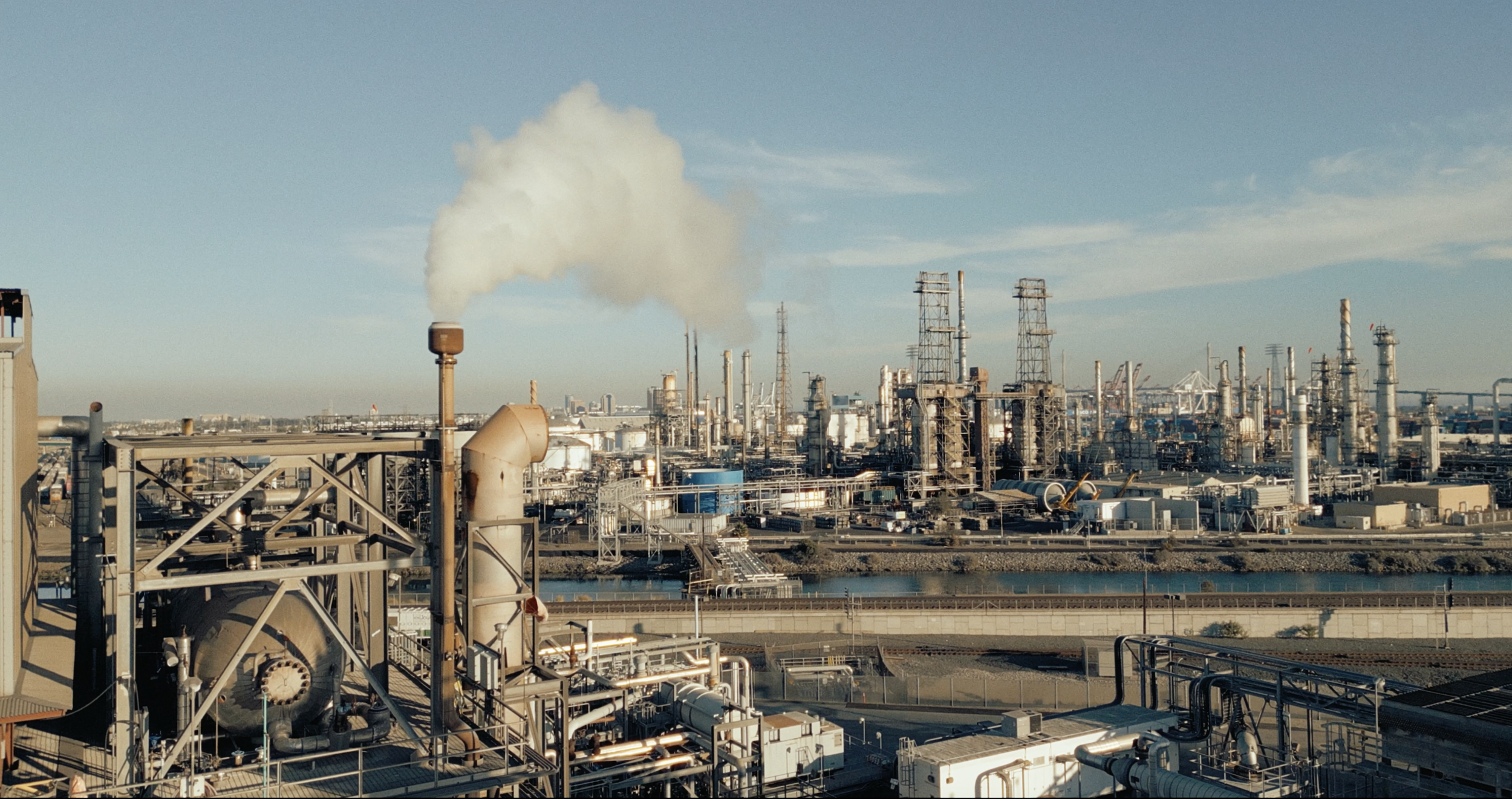
Frontline communities face unprecedented health impacts from living near fossil fuel infrastructure. These impacts include higher rates of respiratory illness, reproductive harm, and cancer. Instead of taking accountability, these polluters are disguising their goal of continuing extraction with a new “green” solution: Carbon Capture and Storage, or CCS.
CCS is a system designed to capture only carbon emissions at polluting facilities, pipe the carbon miles away, and bury it underground. On the surface, it sounds like a possible solution to the issue of greenhouse gas emissions contributing to the climate crisis. But take a closer look, and it quickly becomes clear that CCS is just the industry's latest greenwashing scheme. To provide a climate benefit, CCS must capture and safely store at least 90 percent of CO₂ emissions. In reality, 80% of CCS projects in the U.S. have failed to meet their stated goals—and even the successful ones reduce global emissions by less than 0.1%.
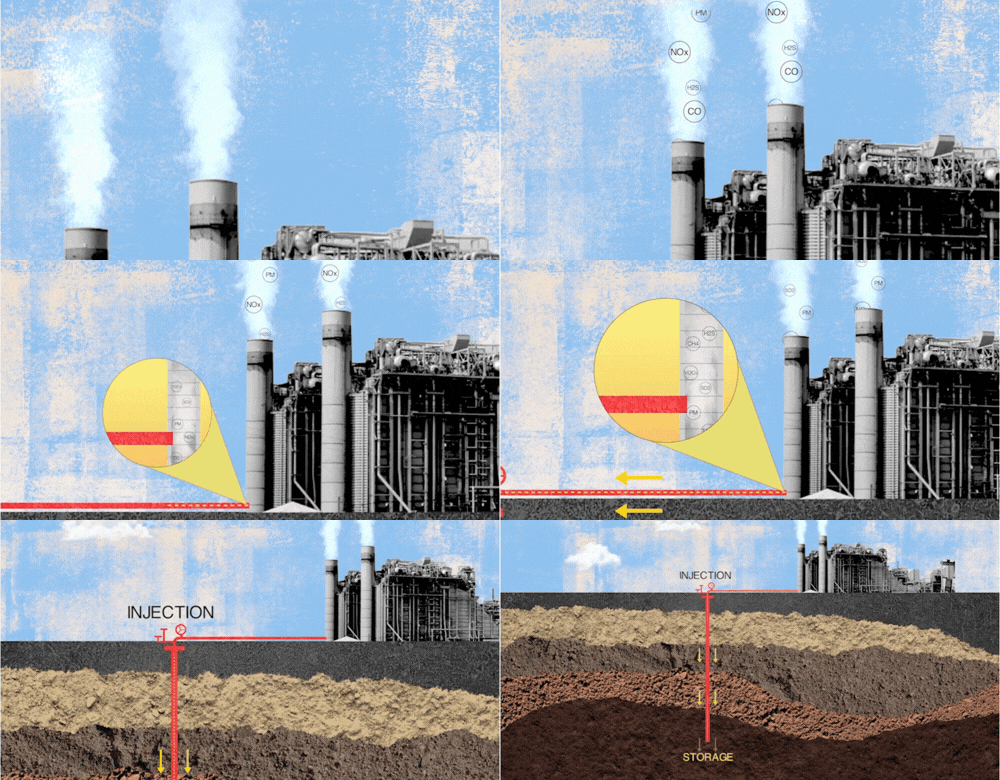
The CCS process: Carbon is captured as it is emitted from a polluting facility, then compressed and transported via pipelines for injection into the ground.
WATCH & LEARN Carbon Capture & Storage:
The truth behind the fossil fuel industry's latest scam.
For decades, PSR-LA has fought alongside the communities most burdened by Big Oil's harmful and extractive operations. Nowhere is this fight more urgent than in California's Central Valley—a region home to working-class, Black, and Brown communities and the fields that grow the food that ends up on all of our tables, with a legacy shaped by oil wells, industrial agriculture, and extractive industries that have contaminated the land, the air, and the water. Today, the oil industry is promoting a new technology—Carbon Capture and Storage—and has its eyes set on the Central Valley as its testing ground.
CCS only captures carbon dioxide, ignoring the dozen other pollutants that are harmful, toxic, and even dangerous to our health, including particulate matter (PM), nitrogen oxides (NOx), sulfur dioxide (SO2), volatile organic compounds (VOCs), carbon monoxide (CO), benzene, hydrogen sulfide (H2S), arsenic, lead, and chlorine. Because CCS doesn't capture these pollutants, communities living near existing polluting facilities are exposed to even more pollution than they would without carbon capture.
There’s also the growing concern of CO2 pipelines.
The Health and Human Impact of CCS
CCS projects will require more pipeline infrastructure to transport captured CO₂ for burial. According to Consumer Watchdog, “to scale carbon capture up, the U.S. Department of Energy estimates the country would need between 30,000 and 96,000 miles of new CO₂ pipeline—compared with about 5,000 miles in place today.”
We’ve already seen the dangers of a pipeline rupture. In 2020, a CO₂ pipeline ruptured near Satartia, Mississippi, sending dozens to the hospital, causing medical vehicles to stall, and creating lasting cognitive and respiratory problems that community members are still reeling from six years after the event. Six months after the initial event in Satartia, another pipeline ruptured, releasing carbon for 22 hours.
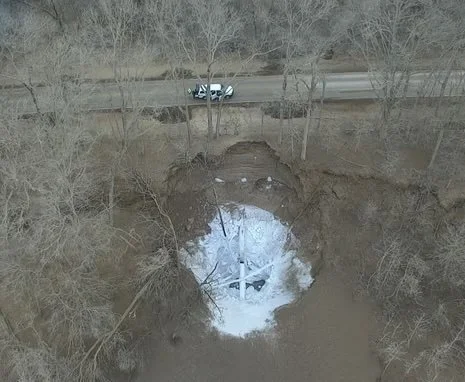
White ice generated by the release of carbon dioxide in Satartia, Mississippi. Photograph: US Department of Transportation via The Guardian.
The Harsh Truth of CCS
The reality is that CCS is an unproven technology that doesn't actually reduce pollution. It is costly, ineffective, and harmful to public health and safety. CCS does nothing to help California transition away from polluting fossil fuel sites, and it could put many communities in harm's way if a carbon pipeline bursts or leaks.
Currently, billions of taxpayer dollars are being funneled into harmful and ineffective carbon capture projects instead of investing in real solutions—such as solar, wind, regenerative farming, wetlands restoration, and traditional Indigenous land management practices.
Carbon Capture and Storage won't fix our climate problems. Real climate solutions deliver lasting, local benefits, not false job promises and health risks.
CCS is a Con—Why?
-
CCS technology is highly costly and burdensome to taxpayers.
Companies with proposed CCS projects can get massive tax breaks from the federal government in the form of the 45Q tax credit. In the recently passed budget reconciliation bill, the 45Q tax credit was increased for CCS projects that use the carbon for “enhanced oil recovery,” meaning they inject the carbon back into the oil field to bolster the extraction process. Enhanced oil recovery defeats the purpose of CCS in the first place; for every metric tonne of CO2 stored in an oil field for enhanced oil recovery, two to five tonnes of CO2 are released into the atmosphere (source).
The United States has spent $ 12 billion in public funds on investments in carbon capture and fossil hydrogen projects (source).
-
Despite its promise, CCS technology has not been able to capture nearly enough carbon dioxide emissions to make a substantial impact on reducing greenhouse gas emissions. No CCS project has ever reached its target CO2 capture rate, according to the Institute for Energy Economics and Financial Analysis (IEEFA). In many cases, due to the use of the captured carbon for enhanced oil recovery, CCS projects are actually increasing overall CO2 emissions (source).
Carbon capture and storage has been widely criticized for its ineffectiveness. The IPCC (Intergovernmental Panel on Climate Change)’s 2023 Synthesis Report concluded that carbon capture and storage in the fossil fuel sector is “one of the most expensive and least effective measures to cut emissions…After more than 50 years of investment, only 30 large-scale CCS projects are operating worldwide, capturing only 0.1% of emissions” (source).
High flash hydrocarbons
High flash hydrocarbons can cause respiratory and skin irritation, headaches, dizziness, nausea, vomiting and other nervous system effects. They are also combustible and pose fire safety concerns. In addition, high flash hydrocarbons are petroleum-based and contribute to greenhouse gas emissions and climate change.
D5 - Decamethylcyclopentasiloxane
D5 is a modified liquid silicone that is often marketed as a “green” alternative to dry cleaning, including under brand names such as GreenEarth. However, despite this branding, it is persistent in both air and aquatic environments. There have also been concerns about its potential to cause cancer and its effects on the liver, nervous system, and immune system.
-
CCS projects inherently ignore the wide array of toxic chemicals being released into the atmosphere along with CO2 at the polluting facility. By only capturing CO2, the facility operators are brushing aside the continued release of other air pollutants that severely negatively impact the health of nearby communities. Moreover, given the energy impacts of the CCS technology to function, there can actually be increases in CO2 and other toxic air emissions (source).
Additionally, CCS projects require the transportation of captured carbon through pipelines to the site where the carbon will be stored underground. There are considerable risks associated with the build out of these pipelines throughout the state, which could total over 1000 miles of new pipelines (source). In 2020 in Satartia, Mississippi, 49 people were hospitalized after a carbon pipeline ruptured and many were left with long-term respiratory impacts. In some cases, first responder vehicles cannot respond to carbon pipeline emergencies due to the carbon dioxide in the air displacing the oxygen needed for combustion engines (source).
CCS projects also put our groundwater and drinking water at risk, with the captured carbon potentially contaminating aquifers (source). And, if CO2 leaks into a water source it can form carbonic acid, which could lead to heavy metals and radioactive materials to leach out of the rock formations and contaminate the water (source).
-
CCS is a distraction from real climate solutions that create healthier and more equitable communities. Compared to CCS, wind and solar have the most potential for greenhouse gas emission mitigation while also being highly cost-effective (source).
There are other forms of natural carbon sequestration that do not pose the same risks to communities, such as preserving and expanding natural and working lands, maintaining healthy soil, and restoring wetlands and riverbeds (source).
We cannot rely on or trust the fossil fuel industry to have our best interests in mind; these schemes are meant to protect their tax subsidies, government giveaways, and profits, not to ensure our health and a real clean energy future.
Related Resources
-
Danger Ahead: The Public Health Disaster That Awaits From Carbon Capture and Sequestration (CCS)
Read our blog about the dangers of CCS to public health.
-
Hydrogen: A False Solution
Learn more about hydrogen, another false solution supported the fossil fuel industry
-
Just Transition
Making way for a Just Transition to a Regenerative Economy